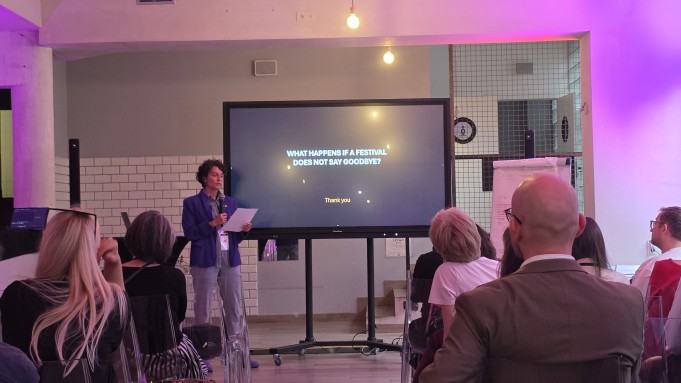
Keynote of Agata Grenda, Artistic Director of the Gdańsk Shakespeare Festival, delivered during FEST FORUM Poland 2026 in Warsaw.
 At FEST FORUM Poland 2026, held on 16 September 2026 at the Institute of Creative Industries in Warsaw, festival professionals from across Poland gathered to establish the FEST FORUM Association of Polish festivals and to discuss the future of the sector. In partnership with the European Festivals Association (EFA), the meeting also devoted a session to the European perspective on cooperation: after an introduction to the EFFEA programme by Donika Rudi Berishaj, EFFEA Project Director, two "EFFEA Sparkle Cases" showed what participation in the Fund can mean in practice.
One of them was Agata Grenda, director of the Gdańsk Shakespeare Theatre and Artistic Director of the Gdańsk Shakespeare Festival, which celebrated its 30th edition this year. Her keynote traced how a prize awarded in the festival's SzekspirOFF competition grew into a full EFFEA residency: in 2023, the Gdańsk Shakespeare Festival became the Leading Festival for the residency of Sławek Krawczyński and Anna Godowska, working with three partner festivals from the European Shakespeare Festivals Network: York Shakespeare Festival (UK), Verona Shakespeare Festival and Fringe (Italy) and Shakespeare Festival im Globe Neuss (Germany). The solo performance Do You Know All Of Them was presented at the Gdańsk Shakespeare Festival on 2 August 2023.
We are delighted to share her keynote in full:
Thank you for inviting me to share our experience with EFFEA and, more broadly, to talk about how we work with emerging artists at the Gdańsk Shakespeare Theatre and the Gdańsk Shakespeare Festival, which celebrated its 30th edition this year.
Thirty editions give you quite a lot of time to observe what festivals are good at, but also where we sometimes fail. We are very good at discovering artists. Every year we watch an enormous number of performances, invite artists to our festivals, give them access to new audiences and, at the end, award some of them. Then the festival ends, everybody goes home, and we immediately start thinking about the next edition.
So the question I would like to start with today is quite simple: what happens if the festival does not say goodbye?
For me, our experience with EFFEA is a very good example of what can happen when we decide to continue a relationship with an artist rather than simply move on to the next one.
At the Gdańsk Shakespeare Festival, this process often begins with the SzekspirOFF competition. Of course, we are an international Shakespeare festival and we present major productions and established artists, but SzekspirOFF has a very different function. It gives space to emerging artists, independent companies and creators who experiment with Shakespeare, challenge traditional interpretations and search for new theatrical languages. It is therefore not simply an additional programme running alongside the main festival. We see it as a place where we can discover artists whom we might want to follow and support further.
This is how our EFFEA story began.
In 2022, during the 26th Gdańsk Shakespeare Festival, Sławek Krawczyński and Anna Godowska presented How Beauteous Mankind Is! and won the Main Prize of the SzekspirOFF competition. We were interested not only in the performance itself, but also in their very distinctive artistic practice and in what they might develop next.
This is an important moment, I think, because giving someone an award is relatively easy. The more difficult question is what you do afterwards. You can congratulate the artists and hope that you meet them again somewhere in Europe, or you can try to create conditions in which the relationship continues and their work can develop further. In our case, EFFEA provided exactly this opportunity.
In 2023, the Gdańsk Shakespeare Festival became the Leading Festival for the EFFEA residency of Sławek Krawczyński and Anna Godowska. We worked together with three partner festivals, all of them members of the European Shakespeare Festivals Network: York Shakespeare Festival in Great Britain, Verona Shakespeare Festival and Fringe in Italy, and Shakespeare Festival im Globe Neuss in Germany.
I should also mention Joanna Śnieżko-Misterek from our team, who prepared the EFFEA application and was the curator and coordinator of the project on our side. This kind of cooperation does not happen only because institutions agree that it is a good idea. Someone has to build the project, connect the partners, take care of the artists and make sure that the artistic and organisational parts actually work together.
The EFFEA project immediately changed the scale of our relationship with the artists. It was no longer simply a collaboration between two Polish artists and one Polish festival. We had four festivals from four European countries involved in the development of their work, each bringing its own experience, knowledge of audiences and professional network.
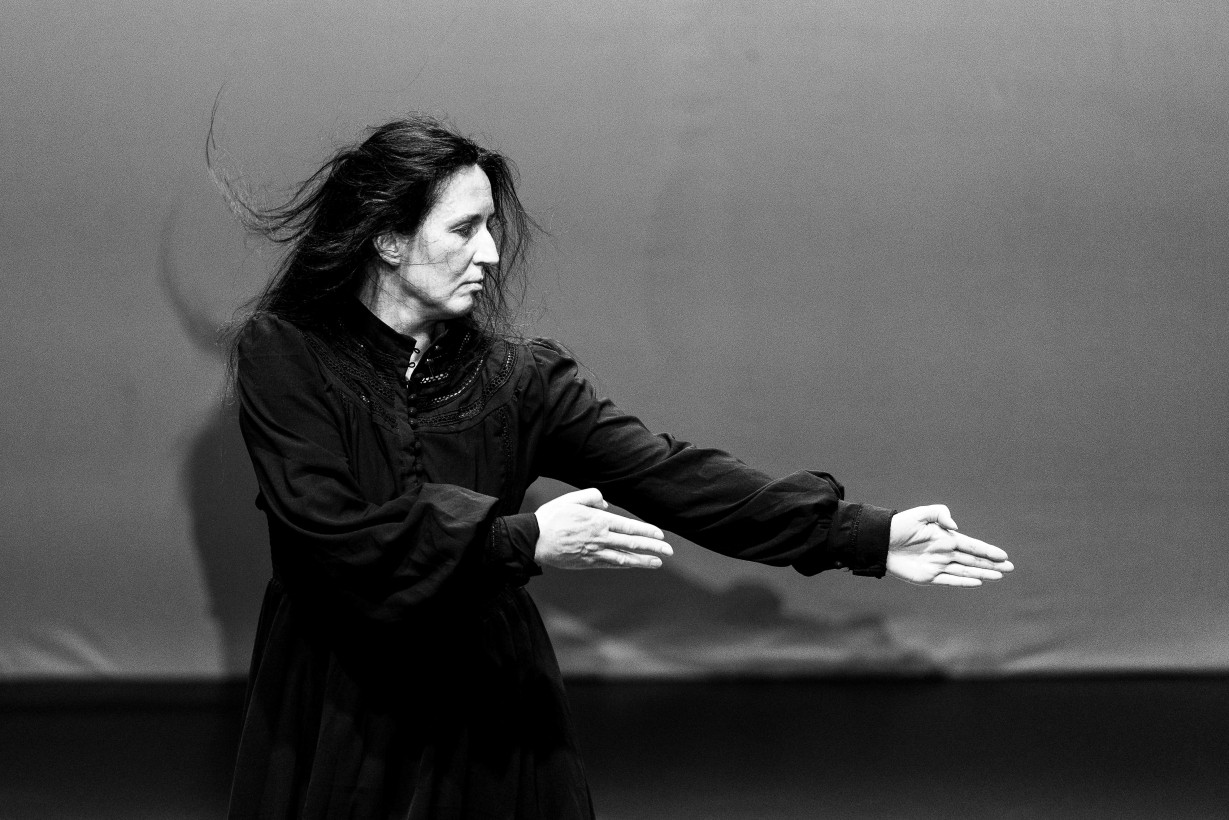
Sławek and Anna had developed their own artistic method based on working with dreams and the unconscious, drawing on the analytical psychology of Carl Gustav Jung and the process-oriented psychology of Arnold Mindell. For the EFFEA project they wanted to use this method to create a new work based on four of Shakespeare's female characters: Miranda from The Tempest, Ophelia and Gertrude from Hamlet, and Lady Macbeth.
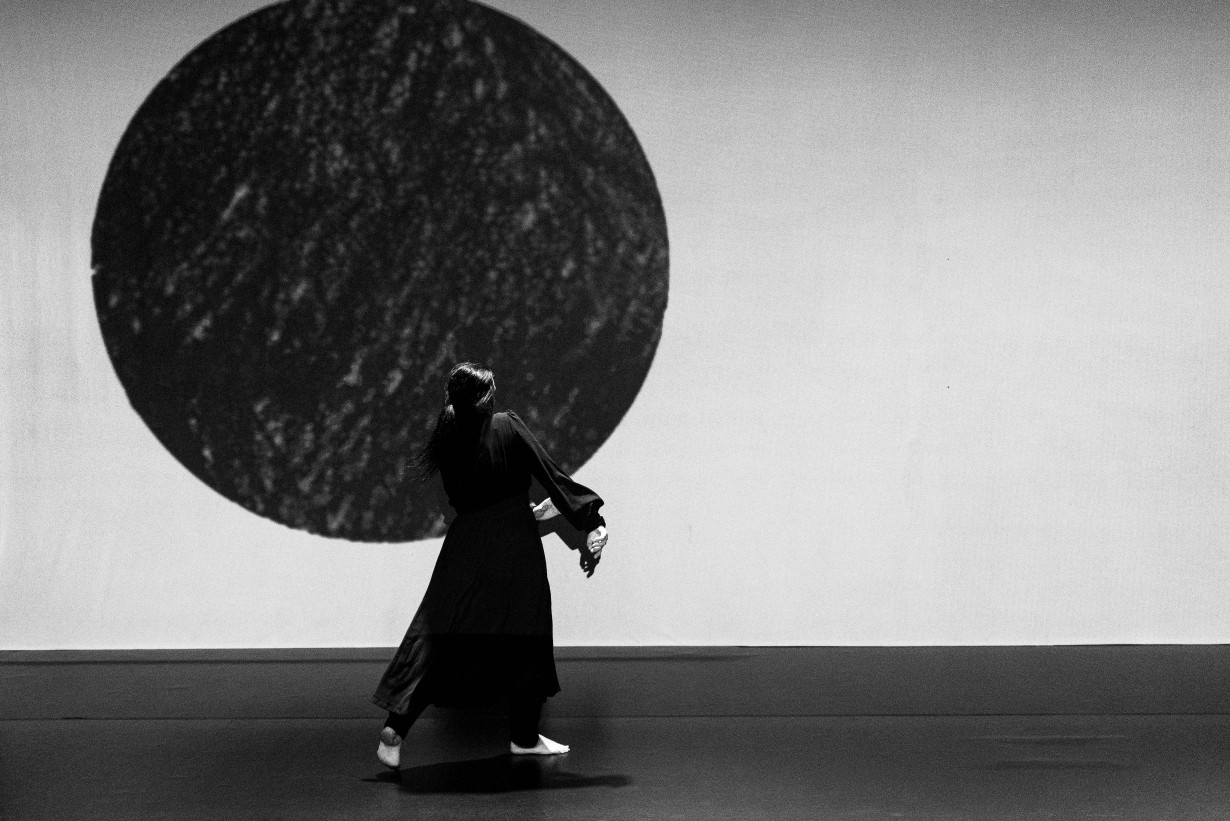
The project included two residencies at the Gdańsk Shakespeare Theatre in 2023. The first one was devoted mainly to research. During the second one the research material began to be transformed into stage structures, choreography, actions and scenes. The process eventually resulted in Do You Know All Of Them, a solo performance choreographed and performed by Anna Godowska and directed by Sławek Krawczyński.
The premiere took place on 2 August 2023 during the Gdańsk Shakespeare Festival. It was presented outside the festival competition and attracted a full audience.
Eight young, non-professional women were invited to participate in the opening scene of the performance. They rehearsed with the artists and then appeared on stage during the premiere. There was also a meeting with the audience in which Sławek and Anna introduced elements of their artistic method and discussed some of the symbolic material used in the performance.
For me, though, one of the most interesting elements from the perspective of EFFEA was the involvement of our partner festivals.
Philip Parr, director of York Shakespeare Festival, Maja Delinić, director of Shakespeare Festival im Globe Neuss in Germany, and John Blondell, Artistic Advisor of the Verona Shakespeare Fringe Festival in Italy, came to Gdańsk. They were able to see the performance and meet the artists, but their role went considerably further than simply being invited international guests.
They worked with Sławek and Anna as coaches and discussed very practical aspects of developing an international career: how to promote their artistic method and their work internationally, what is required when preparing a performance for an international market, how sustainable touring can work, what different festival audiences may expect and what an independent company needs to understand if it wants to present its work internationally.
I think this is an important part of the EFFEA model because artists do not only need an opportunity to perform abroad. They also need access to the knowledge that allows them to understand how this international environment actually works.
Our partner festivals were already members of the European Shakespeare Festivals Network, so in a sense the network already existed before the project. We knew one another and were already in conversation. What EFFEA did was give this existing network a very concrete purpose. Instead of simply exchanging information about our programmes and meeting at conferences, we could work together around the development of particular artists.
Anyone who works internationally in culture knows that there is quite a significant difference between networking and actual cooperation. We attend conferences, meet colleagues, exchange ideas and very often finish conversations by saying that we should find a way of doing something together. Sometimes we do, and sometimes we meet again a year later and have almost exactly the same conversation. What I appreciated about EFFEA was that it created a practical mechanism for turning those relationships into something tangible.
Again, the important thing for us is not simply the competition itself or the question of who wins. We are interested in what happens afterwards: whether participation can give an artist professional visibility, allow them to test their ideas, help them develop their artistic identity and create contacts with critics, audiences and theatre professionals that may lead to further collaboration.
This is why I see SzekspirOFF and our experience with EFFEA as related rather than separate initiatives. They all address the same problem from slightly different angles. A festival can be a place where an artist is discovered, but ideally it should also be able to become a place from which an artist moves further.
I think we sometimes underestimate how difficult that transition can be. An emerging artist may already have a very strong artistic language and may be producing very interesting work, but that does not automatically mean that they know how to build international relationships, how to present their work to programmers in other countries or how to navigate the practical requirements of international touring.
This is where festivals can make a real difference because we already possess much of that knowledge and many of those relationships. We know other festival directors, programmers and institutions. We understand our audiences and our local contexts. We know how international projects are developed and what practical problems appear when work begins to travel.
In the case of the EFFEA project, the Gdańsk Shakespeare Theatre could provide accommodation in the theatre, professionally equipped rehearsal space, technical and organisational support, promotion and the production and presentation of the premiere during the festival. At the same time, the international partners could bring their own professional perspectives and experience into the process.
Taken together, this created something much more substantial than simply offering an artist a stage for one evening. The artists had time for research and for transforming that research into a performance, professional conditions in which to work, contact with an audience and direct access to experienced festival professionals from several European countries.
This is why I think festivals should increasingly think of themselves not only as presenters of finished artistic work, but as places where artistic development can actually happen.
Of course, this particular project has a different significance for us today because Sławek Krawczyński passed away in 2024. Looking back, we are therefore especially grateful that EFFEA made it possible for this work to be created and shared. Do You Know All Of Them is now also part of Sławek's artistic legacy.
So if I were to encourage other festivals to consider EFFEA, I would probably suggest not beginning with the question: “What kind of European project should we create?” I would begin somewhere much simpler and think about the artists you have already seen.
Perhaps somebody appeared in your OFF programme, won your competition or brought a small independent production to your festival. Perhaps you saw a performance which was not perfect but contained something that made you curious. Perhaps you met an artist whose way of thinking stayed with you after the festival had finished.
Instead of asking whether you should invite the same performance again, ask what that artist might be capable of doing next if they had the right conditions and the right partners.
Then look at the network you already have. Perhaps another festival director has seen the same artist, or perhaps colleagues in two or three countries would be interested in following their development. Each institution can bring something different to that process: knowledge, contacts, an audience, a rehearsal space, professional advice or simply another perspective on the work.
For me, this is one of the most useful ideas behind EFFEA. It does not require us to create relationships from nothing. It allows us to use relationships that already exist between European festivals and focus them on the development of artists.
After thirty editions of the Gdańsk Shakespeare Festival, I have become increasingly convinced that the value of a festival cannot be measured only by the performances it presents. Performances inevitably end: the audience leaves, the set is dismantled and we begin preparing the next edition. What can continue are the relationships created around those performances.
So I would like to finish with the same question with which I began: what happens if the festival does not say goodbye?
Our experience suggests that an award can become the beginning of a longer artistic process, an existing network can become an actual working partnership, and an artist who enters a festival through an emerging-artists programme can be given the conditions to develop a completely new work.
Perhaps this is one of the most useful things we can do as festival directors: not only decide what deserves to be presented today, but use our institutions, our knowledge and our international relationships to help create some of the work that audiences may see tomorrow.
For us, that was the real value of EFFEA.